

The 24/7 Solar Formula: How to Power a Continuous Load Day and Night
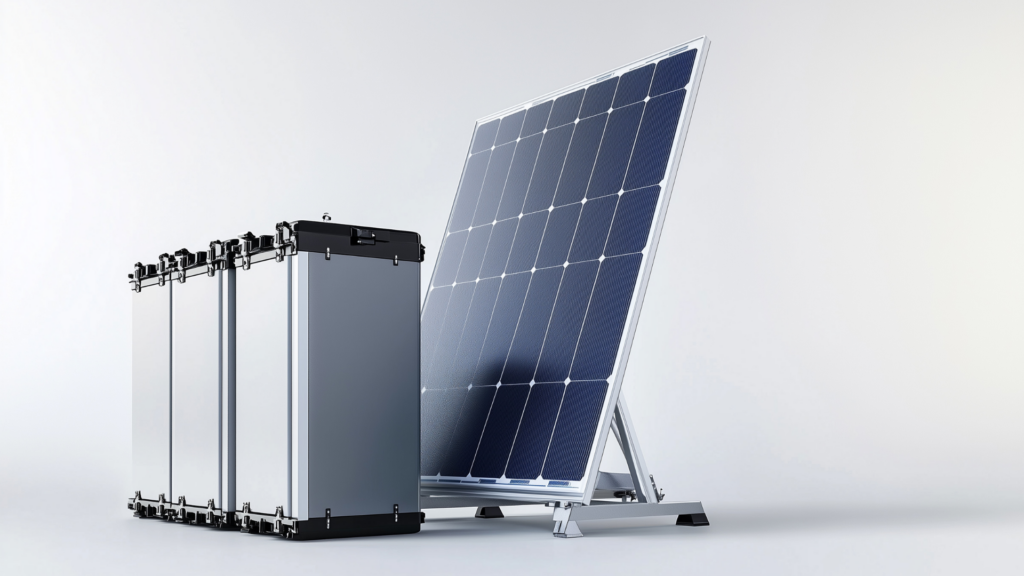
Imagine you have a single piece of equipment, maybe a heavy-duty central AC unit, a critical server rack, or a water pump, that consumes a steady 4 kilowatts of power. And here is the catch: it can never turn off. It needs to run 24 hours a day, 7 days a week, 365 days a year.
Naturally, you want to power it with solar. You might think, “Easy, I will just buy a 4-kilowatt solar system!”
If you do that, your system will shut down the moment the sun dips below the horizon.
To keep a constant load running smoothly through the night, you have to build a system that acts like a smart energy bank. Let’s break down exactly what you need to make it happen, minus the math headache.
1. The Solar Panels: Thinking Ahead
Solar panels only get about 5 to 6 hours of prime, direct sunlight a day. That means during those few peak hours, your panels have to work overtime. They need to generate enough immediate electricity to run your equipment during the day, plus generate a massive surplus to save for the night.
Because of this double duty, you cannot just match your load. You need a solar array that is about five times larger. For a 4 kilowatt continuous load, you will want roughly 22 kilowatts of solar panels (which translates to about 40 standard-sized panels) to capture enough sunlight to last a full 24 hours.
2. The Battery: Your Nighttime Fuel Tank
When the sun goes down, your equipment still has 12 long hours of darkness to get through. This is where your batteries step up.
You need a battery bank large enough to hold all that saved daytime energy. Plus, because batteries naturally lose a little bit of energy as heat while transferring power, you need a built-in safety cushion. To comfortably cruise through the night without any blackouts, you will need a 60 kilowatt-hour battery bank.
3. The Inverter: The Heavy-Duty Translator
Solar panels and batteries speak one language (DC power), but your household appliances speak another (AC power). The inverter is the digital translator that bridges the two.
Because you have a massive 22 kilowatt solar array flooding the system with energy during the day, your translator needs to be big enough to handle that heavy traffic without overloading. For this setup, a robust 16-kilowatt inverter is the perfect fit to manage the flow.
The Ultimate 24/7 Checklist
If you are building a system to keep a constant 4 kilowatt load alive day and night, your final shopping list looks like this:
- 40 Solar Panels to catch the sun
- A 60 kilowatt-hour Battery Bank to survive the night
- A 16 kilowatt Inverter to translate the power
By sizing your system to outsmart the sunset, you get completely reliable, uninterrupted power, all courtesy of the sun.